Slips, Trips and Falls Prevention in Pakistani Workplaces (2026)
Slips, trips and falls prevention in Pakistan is an essential part of workplace safety management. From construction sites in Lahore and Karachi to textile factories in Faisalabad and warehouses in Rawalpindi, unsafe floors, loose cables, poor lighting and inadequate housekeeping can cause preventable workplace injuries.
Consider a construction site in Bahria Town, Lahore, where workers regularly cross a wet access route after concrete washing. Although nobody has fallen yet, the hazard remains. Without proper controls, an ordinary working day can quickly turn into an accident.
Slips, trips and falls (STF) are workplace incidents caused by losing grip, catching a foot on an obstacle or losing balance. Employers and safety officers can reduce these risks through hazard identification, suitable flooring, effective housekeeping, regular inspections and appropriate safety footwear.
This guide explains common STF hazards, practical prevention measures and workplace inspection methods for Pakistani safety professionals in 2026.
Why Are Slips, Trips and Falls a Workplace Safety Concern in Pakistan?
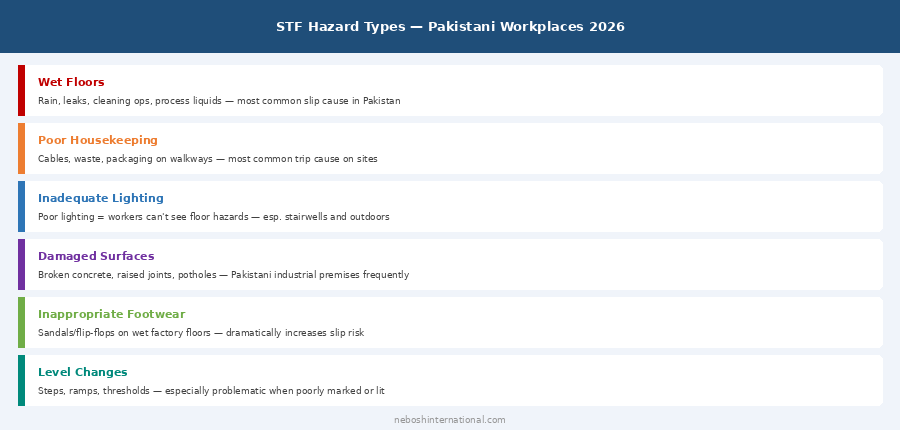
Pakistani workplaces face a variety of conditions that can increase STF risks. Heavy rainfall, water entering buildings, oil contamination, unfinished construction surfaces and poorly maintained walkways can make pedestrian movement unsafe.
Furthermore, busy industrial environments often contain moving equipment, temporary cables, stored materials and changing work areas. Without clear responsibilities, these hazards can remain unnoticed.
STF prevention is particularly important in:
- Construction: Uneven ground, loose bricks, debris, temporary access routes and wet concrete.
- Manufacturing and textiles: Oil spills, water leaks, fabric waste and production residues.
- Oil and gas: Hydrocarbon contamination, hoses, pipelines and restricted access routes.
- Warehouses: Packaging waste, damaged pallets, obstructed aisles and loading areas.
- Offices and hospitals: Wet floors, trailing cables, stairs and poorly maintained surfaces.
Consequently, safety officers should include STF hazards in routine workplace inspections and risk assessments rather than waiting for an accident to occur.
Understanding Slips, Trips and Falls
Although these terms are often grouped together, each describes a different type of incident. Understanding the difference helps safety officers select effective control measures.
1. Slips
A slip occurs when a person’s footwear loses sufficient grip on the walking surface. The person may lose balance and fall onto the same level.
Common causes include:
- Water, oil or chemical spills.
- Wet floors following cleaning.
- Smooth or worn flooring.
- Inadequate drainage.
- Unsuitable footwear.
- Dust or other loose materials that reduce grip.
For example, a textile factory in Faisalabad may develop slippery areas around washing equipment or leaking machinery. Prompt spill removal, leak repairs and suitable flooring can reduce exposure.
2. Trips
A trip happens when a person’s foot strikes an obstacle or an unexpected change in floor level, disrupting balance.
Typical hazards include:
- Electrical cables and hoses across walkways.
- Construction debris and discarded packaging.
- Uneven concrete or damaged tiles.
- Poorly stored tools and materials.
- Raised floor edges and unmarked steps.
Therefore, pedestrian routes should remain clear, accessible and properly maintained throughout the working day.
3. Falls
Falls can occur on the same level or from an elevated position. A same-level fall may result from slipping or tripping, while a fall from height can lead to severe or fatal injuries.
Examples include falling on a wet factory floor, missing a step on a staircase or falling from an unprotected construction platform.
Falls from height require additional controls, including suitable work platforms, edge protection and safe access systems. See the UK Health and Safety Executive’s slips and trips guidance for further prevention information.
7 Practical Ways to Prevent Slips, Trips and Falls at Work
1. Maintain Good Housekeeping
Effective housekeeping is one of the simplest ways to reduce trip hazards. However, it requires clear responsibilities and consistent supervision.
Safety officers should ensure that:
- Walkways remain free from tools, cables and waste.
- Materials are stored in designated areas.
- Waste is removed regularly.
- Hoses and cables are routed away from pedestrian paths.
- Emergency exits and access routes remain unobstructed.
On construction sites in Karachi, Lahore and Peshawar, housekeeping checks should cover work areas, access roads, stairways and material storage zones.
2. Control Wet and Contaminated Floors
Wet floors can become hazardous during cleaning, equipment maintenance, rainfall and production activities.
To control these risks:
- Repair leaking pipes, roofs and machinery.
- Improve drainage where water accumulates.
- Clean oil and chemical spills promptly using suitable procedures.
- Restrict access to areas during hazardous cleaning activities.
- Use warning signs and barriers when floors are temporarily wet.
- Restore safe walking conditions before reopening the area.
Warning signs alone are not sufficient. Wherever possible, remove the source of contamination and prevent workers from entering the affected area.
3. Inspect and Repair Walking Surfaces
Damaged flooring can cause trips and reduce footwear grip. Routine inspections should identify broken tiles, potholes, loose covers, cracked concrete and unexpected level changes.
Where defects create an immediate danger, isolate the affected area until suitable repairs are completed.
Construction managers should also inspect temporary walkways, ramps, platforms and access routes as site conditions change.
4. Provide Adequate Lighting
Workers need sufficient lighting to recognise obstacles, floor defects and changes in level.
Pay particular attention to:
- Staircases and corridors.
- Night-shift work areas.
- External pedestrian routes.
- Warehouses and storage rooms.
- Emergency exits and access routes.
Replace failed lights promptly and check that shadows or glare do not hide hazards.
5. Select Suitable Safety Footwear
Safety footwear should match the actual workplace conditions. A boot suitable for a dry construction site may not provide sufficient grip on an oily factory floor.
Employers should assess the flooring, contamination, work activities and manufacturer’s performance information before selecting footwear.
Check that footwear has appropriate slip-resistant properties, suitable tread and soles in good condition. Replace damaged or excessively worn footwear.
Nevertheless, personal protective equipment (PPE) should support stronger controls rather than replace effective drainage, housekeeping, maintenance or safer flooring.
6. Train Workers to Recognise Hazards
Workers should understand how to identify, report and respond to unsafe walking conditions.
Training should explain:
- How to report spills and damaged floors.
- Why cables and materials must not obstruct walkways.
- How to use designated pedestrian routes.
- When warning signs and barriers are required.
- How to respond to a serious or uncontrolled hazard.
Supervisors should encourage prompt reporting without blaming workers for raising genuine safety concerns.
7. Conduct Regular Workplace Inspections
A structured inspection helps identify hazards before they cause injuries. Inspection frequency should reflect the level of risk, workplace activity, incident history and changes in conditions.
For example, a factory handling liquids may need more frequent checks around production equipment than a low-risk office.
In addition to scheduled inspections, carry out checks after heavy rainfall, spills, equipment leaks, cleaning operations and significant changes to workplace layout.
Applying the Hierarchy of Controls to STF Hazards
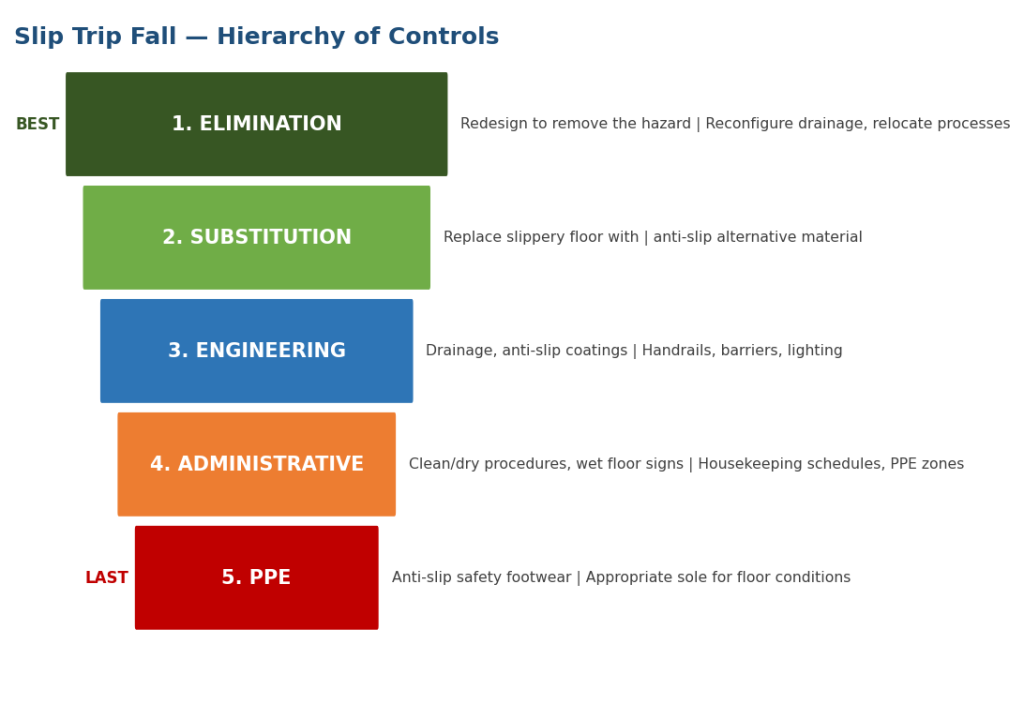
The hierarchy of controls helps employers select measures according to their effectiveness.
| Control level | Practical example |
|---|---|
| Elimination | Remove unnecessary obstacles or redesign a route to avoid a wet process. |
| Substitution | Replace an unsuitable floor finish with a safer alternative. |
| Engineering | Improve drainage, install handrails and repair damaged surfaces. |
| Administrative | Introduce cleaning procedures, inspections and hazard reporting. |
| PPE | Provide suitable slip-resistant safety footwear. |
The strongest approach combines suitable physical controls with effective housekeeping, maintenance and supervision. Warning signs and PPE alone should not be relied upon where hazards can be removed or better controlled.
Workplace STF Inspection Checklist for Safety Officers
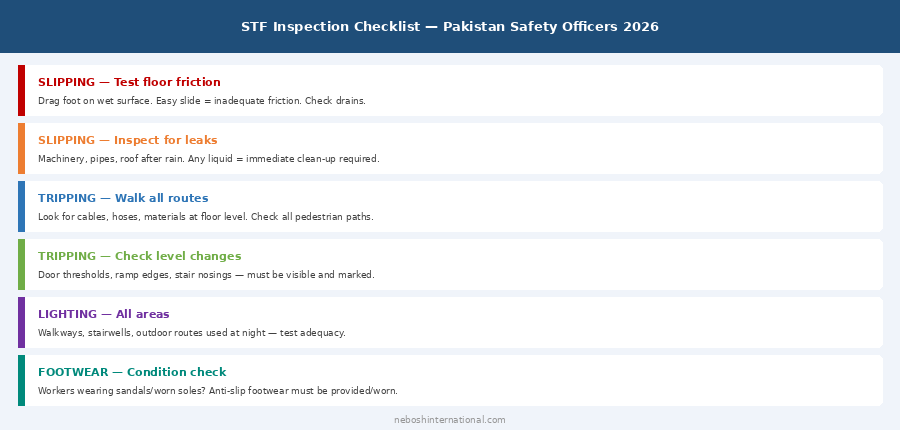
Use the following checklist during inspections of construction sites, factories, warehouses and offices in Pakistan.
- Are pedestrian routes clear of cables, hoses, tools and waste?
- Are floors free from uncontrolled water, oil and chemical spills?
- Are leaks repaired and drainage systems functioning?
- Are damaged floors, loose tiles and uneven surfaces identified?
- Are staircases, ramps and changes in level safe?
- Is lighting adequate in pedestrian areas and during night shifts?
- Are suitable slip-resistant safety shoes provided where required?
- Are cleaning activities controlled with appropriate signs or barriers?
- Do workers know how to report hazards?
- Are inspection findings assigned to responsible persons and closed out?
Record each significant finding, its risk level, the required corrective action, the responsible person and the completion date. Verify that the control works before closing the issue.
STF Prevention and NEBOSH IGC in Pakistan
Slips, trips and falls are useful examples of physical hazards for people studying occupational health and safety. They demonstrate how hazard identification, risk assessment and control selection work in real workplaces.
For NEBOSH IGC candidates, a strong practical approach involves describing the actual hazard, identifying who could be harmed, explaining the possible consequences and recommending controls suited to the circumstances.
For example, instead of writing only “keep the floor clean,” a stronger recommendation would be to repair a leaking machine, isolate the affected walkway during cleanup, remove the contamination using a suitable procedure and introduce checks to prevent recurrence.
This approach is also relevant to GIC2 practical risk assessment preparation. Candidates should follow the current assessment instructions and official syllabus rather than relying on outdated examination guidance.
Learners can explore NEBOSH course guidance in Pakistan, read the NEBOSH IGC examination guide and consult the official NEBOSH website for qualification information.
Frequently Asked Questions
The most effective approach is to remove hazards where possible and control remaining risks through suitable flooring, drainage, housekeeping, maintenance, adequate lighting and appropriate footwear. Regular inspections help ensure that controls remain effective.
Common hazards include wet floors, oil spills, loose cables, construction debris, uneven surfaces, damaged tiles, poor lighting and obstructed walkways. Their importance varies according to the industry and working environment.
Inspection frequency should reflect workplace risk. High-risk production areas may require checks every shift or more frequently, while other locations may need scheduled inspections at suitable intervals. Spills, leaks, damaged surfaces and changing site conditions require prompt attention.
Suitable slip-resistant safety footwear is the main PPE measure for reducing slip risk. Selection should reflect floor conditions, contaminants, work activities and the footwear manufacturer’s specifications. PPE does not replace effective hazard removal and engineering controls.
Yes. STF hazards provide practical examples for learning hazard identification, risk assessment and control measures. They can also help candidates understand how to make specific, realistic workplace safety recommendations.
Not every incident can be eliminated, but effective risk assessment, suitable workplace design, prompt maintenance, housekeeping and worker training can significantly reduce exposure to these hazards.
Conclusion
Slips, trips and falls prevention in Pakistani workplaces depends on recognising everyday hazards and controlling them before an injury occurs. Wet floors, poor housekeeping, damaged surfaces, inadequate lighting and unsuitable footwear all require practical attention.
For safety officers in Karachi, Lahore, Rawalpindi, Faisalabad and other industrial centres, a consistent inspection programme and clear corrective-action process can make a meaningful difference.
NEBOSH IGC candidates can also use these examples to strengthen their understanding of hazard identification and risk control. Ultimately, effective workplace safety requires more than warning signs or certificates: it requires identifying real hazards, implementing suitable controls and checking that those controls work.

NEBOSH International General Certificate (IGC) certified HSE professional focused on occupational health and safety, workplace risk assessment, hazard identification, and safety management systems. The content published on NeboshInternational.com is based on current industry guidance, recognized safety best practices, and practical workplace examples to help professionals in Pakistan and the Gulf prepare for NEBOSH qualifications and build successful HSE careers.