Chemical Safety in Pakistan: Complete Workplace Guide for 2026
Chemical safety in Pakistan is an essential part of occupational health and safety management. From textile factories in Faisalabad to construction projects in Lahore and manufacturing plants in Karachi, workers may handle hazardous substances every day. Without proper controls, these chemicals can cause burns, breathing problems, occupational diseases, fires and environmental damage.
For safety officers, understanding chemical hazards is more than identifying warning labels. It involves assessing exposure, selecting appropriate control measures, training workers and preparing for chemical emergencies.
What is chemical safety in the workplace? Chemical safety is the process of identifying hazardous substances, evaluating the risks they present, and implementing measures to prevent harmful exposure, accidents and environmental contamination.
This guide explains chemical safety in Pakistani workplaces, including GHS hazard symbols, Safety Data Sheets (SDS), chemical risk assessments, safe storage, personal protective equipment (PPE) and the practical knowledge required by NEBOSH IGC candidates.
1. What Are Chemical Hazards in Pakistani Workplaces?
A chemical hazard is a property of a substance that can cause harm to people, property or the environment. The level of risk depends on the substance, its concentration, the exposure route, the amount used and the effectiveness of workplace controls.
Chemical hazards are present across many Pakistani industries.
| Industry | Common chemical hazards | Potential harm |
|---|---|---|
| Construction | Cement, silica dust, paints and solvents | Dermatitis, respiratory disease and poisoning |
| Textile manufacturing | Dyes, cleaning agents and finishing chemicals | Skin irritation, respiratory problems and chemical burns |
| Oil and gas | Hydrocarbons, hydrogen sulphide and process chemicals | Poisoning, fire and explosion |
| Healthcare | Disinfectants, sterilising agents and laboratory chemicals | Burns, irritation and toxic exposure |
| Agriculture | Pesticides, herbicides and fertilisers | Poisoning and skin or respiratory disorders |
| Battery manufacturing | Acids and lead compounds | Chemical burns and lead toxicity |
| Pharmaceutical manufacturing | Solvents and active pharmaceutical ingredients | Irritation, sensitisation and substance-specific health effects |
For example, a worker using industrial solvents in a poorly ventilated workshop may inhale harmful vapours throughout a shift. Although symptoms might not appear immediately, repeated exposure can cause serious health problems depending on the substance and exposure level.
Safety officers in Karachi, Lahore, Faisalabad, Rawalpindi and other industrial centres should therefore include chemical hazards in routine inspections and formal workplace risk assessments.
2. How Do Chemicals Enter the Human Body?
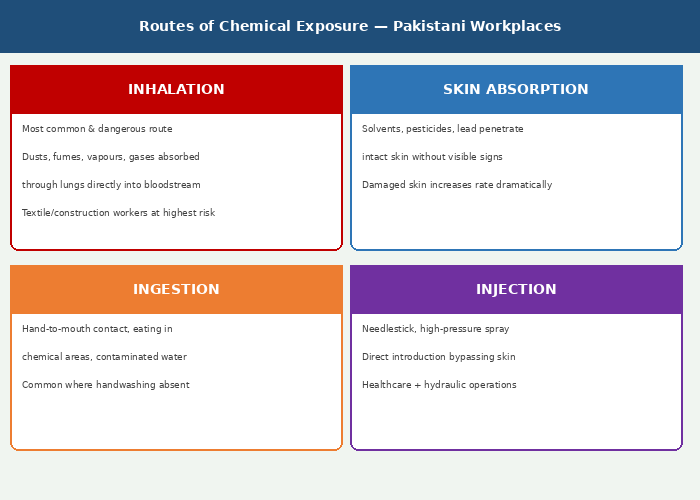
Understanding the routes of chemical exposure helps safety officers choose effective preventive measures.
Inhalation
Inhalation occurs when workers breathe in hazardous gases, vapours, fumes, dust or mists. Welding fumes, silica dust and solvent vapours are common examples.
Control measures: Use suitable local exhaust ventilation, enclosed processes, dust suppression and appropriate respiratory protective equipment where required.
Skin absorption
Some chemicals pass through the skin and enter the body. Certain solvents, pesticides and other substances can cause harm through skin contact, even when workers do not notice immediate irritation.
Control measures: Select chemically compatible gloves, prevent splashes, provide suitable washing facilities and replace contaminated clothing promptly.
Ingestion
Chemicals can enter the digestive system when workers eat, drink or smoke with contaminated hands. Poor hygiene can increase this risk.
Control measures: Prohibit eating and drinking in chemical handling areas, provide handwashing facilities and maintain clean welfare areas.
Injection
Injection can occur through contaminated sharp objects, needlestick injuries or high-pressure fluid systems that force chemicals through the skin.
Control measures: Use suitable equipment, follow safe handling procedures and obtain urgent medical assessment following suspected high-pressure injection injuries.
3. Types of Chemical Health Effects
Chemical effects may develop immediately or after repeated exposure.
- Acute toxicity: Harm following a single or short-term exposure, such as poisoning after inhaling a toxic gas.
- Chronic toxicity: Health effects developing after repeated or prolonged exposure, depending on the chemical and dose.
- Corrosive effects: Severe damage to skin, eyes or other tissues caused by substances such as concentrated acids and alkalis.
- Irritation: Inflammation of the skin, eyes or respiratory tract.
- Carcinogenic effects: Increased cancer risk from exposure to certain substances, including benzene and asbestos.
- Sensitisation: An allergic response that may develop after exposure, such as occupational asthma caused by certain isocyanates.
- Reproductive toxicity: Potential harm to fertility, pregnancy or foetal development from specific hazardous substances.
Safety officers should consult the relevant Safety Data Sheet rather than assuming that all chemicals produce the same effects.
4. GHS Chemical Hazard Symbols Every Safety Officer Should Know
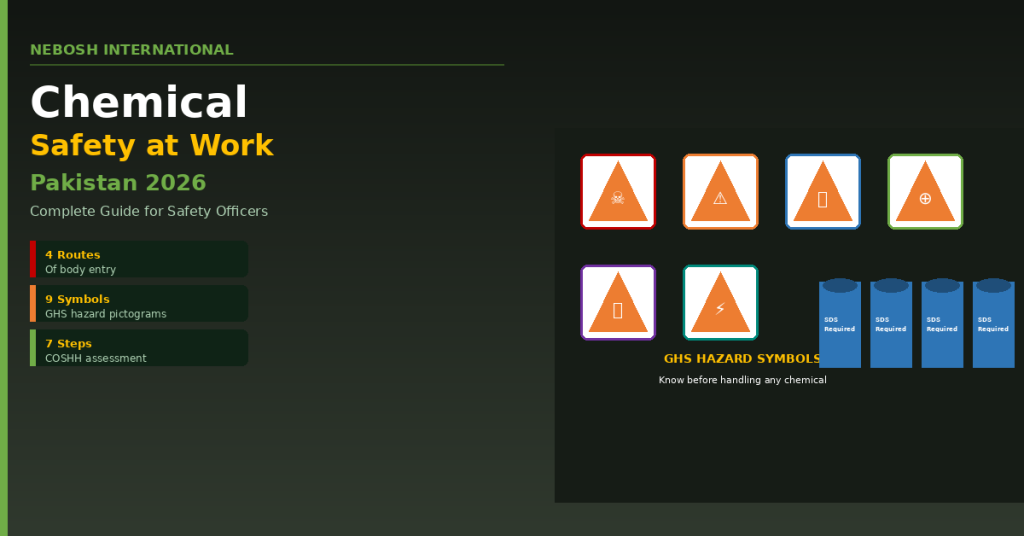
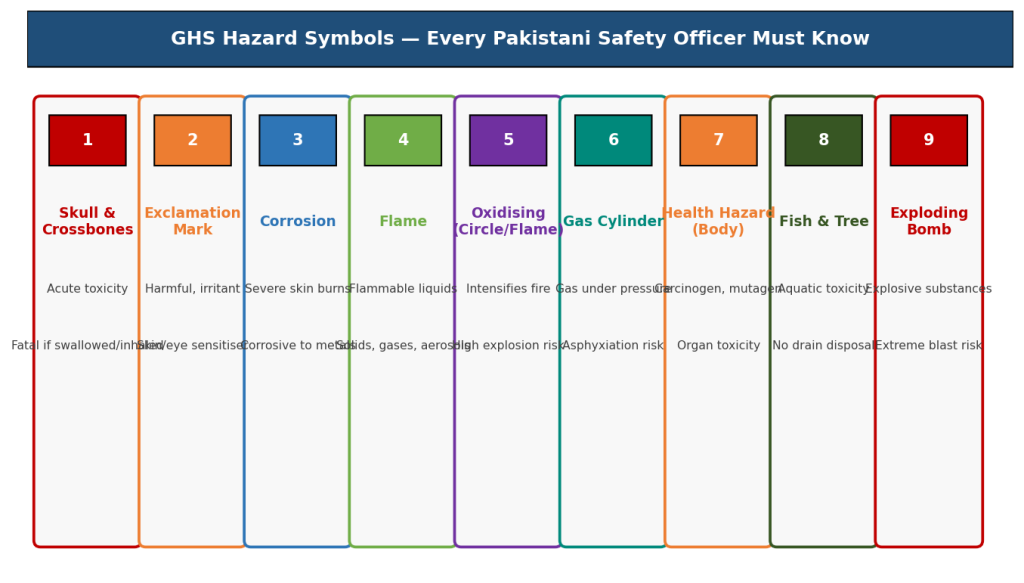
The Globally Harmonized System of Classification and Labelling of Chemicals (GHS) uses standardised pictograms to communicate chemical hazards. Recognising these symbols helps workers understand warnings before handling a substance.
| Symbol | Meaning | Example or precaution |
|---|---|---|
| Flame | Flammable substances | Keep away from ignition sources |
| Skull and crossbones | Acute toxicity | Prevent exposure and follow emergency instructions |
| Corrosion | Severe skin or eye damage; corrosive to metals | Use suitable chemical-resistant protection |
| Exclamation mark | Irritation or other specified harmful effects | Follow label precautions |
| Health hazard silhouette | Certain serious or long-term health effects | Review chronic health risks and exposure controls |
| Gas cylinder | Gas under pressure | Secure cylinders and protect them from heat |
| Flame over circle | Oxidising substances | Keep away from incompatible combustible materials |
| Exploding bomb | Explosive hazards | Follow specific handling and storage requirements |
| Environment symbol | Hazardous to aquatic life | Prevent releases to drains and waterways |
The environmental pictogram is widely used on chemical labels, although its regulatory status differs between systems. Always follow the applicable classification and labelling requirements.
Workers should never rely on a pictogram alone. Read the full label and consult the Safety Data Sheet before using an unfamiliar substance.
5. How to Conduct a Chemical Risk Assessment: Seven Steps
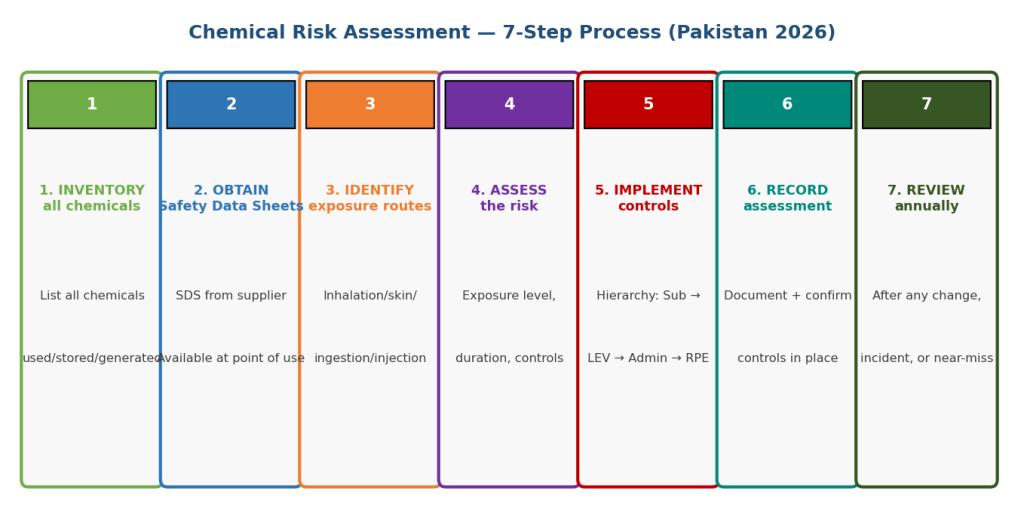
A chemical risk assessment identifies who may be harmed, how exposure could occur and which controls are necessary.
Step 1: Prepare a chemical inventory
List all hazardous substances used, stored or produced at the workplace. Include cleaning products, maintenance materials, paints, solvents and hazardous substances generated by work activities.
Step 2: Obtain Safety Data Sheets
Request current SDS documents from suppliers. A Safety Data Sheet typically provides information about hazards, composition, first aid, firefighting, accidental release, handling, storage, exposure controls and disposal.
Keep SDS documents accessible to workers who need them. Where possible, provide clear instructions in a language they understand.
Step 3: Identify exposed people
Consider operators, cleaners, maintenance staff, contractors, visitors and workers in nearby areas. Evaluate whether particular workers may require additional protection based on the substance and their circumstances.
Step 4: Assess exposure and risk
Examine the chemical’s hazardous properties, quantity, concentration, physical form, frequency of use, exposure duration, ventilation and existing controls.
Where necessary, arrange competent exposure monitoring or occupational hygiene assessments.
Step 5: Select suitable controls
Apply the hierarchy of controls, prioritising elimination and substitution before relying on PPE.
For example, replace a hazardous solvent with a suitable less hazardous alternative where technically feasible. If substitution is not possible, consider enclosure and effective local exhaust ventilation.
Step 6: Record and implement actions
Document the identified hazards, people at risk, existing precautions, additional controls, responsible persons and completion dates. Explain the required procedures to affected workers.
Step 7: Review the assessment
Review it when chemicals, equipment or work processes change, after an incident or near miss, or when monitoring indicates that existing controls are inadequate. Schedule periodic reviews appropriate to the workplace risk.
A written assessment is useful only when the controls are implemented and remain effective.
6. Essential Chemical Safety Controls
Apply the hierarchy of controls
Effective chemical hazard management follows this order of preference:
- Elimination: Remove the hazardous substance or activity.
- Substitution: Replace it with a less hazardous alternative.
- Engineering controls: Use enclosure, isolation or local exhaust ventilation.
- Administrative controls: Introduce safe work procedures, training, restricted access and appropriate hygiene arrangements.
- PPE: Provide suitable gloves, goggles, protective clothing and respiratory protection when indicated by the assessment.
PPE must be compatible with the particular chemical. A glove suitable for one solvent may not protect against another. Respirators also require correct selection, fit, maintenance and appropriate training.
Store chemicals safely
Store chemicals in designated areas with suitable containment, ventilation and access controls. Separate incompatible substances, such as certain acids, alkalis, oxidisers and flammable materials, according to their SDS requirements.
Keep containers labelled and closed when not in use. Do not store chemicals in food or drink containers. Provide suitable spill containment and keep storage areas away from ignition sources where flammable materials are present.
Prepare for spills and emergencies
Workplaces handling hazardous chemicals should establish procedures for spills, leaks, fires and accidental exposure.
Depending on the hazard, arrangements may include emergency showers, eyewash facilities, suitable spill kits, alarms, evacuation routes and access to emergency medical assistance.
Workers should not attempt to clean up an unknown or dangerous chemical release without appropriate training and equipment. Isolate the area, alert responsible personnel and follow the emergency plan.
Maintain training and health surveillance
Train workers to read labels, interpret SDS information, use controls and report symptoms or unsafe conditions. Where exposure risks justify it, arrange appropriate occupational health surveillance and exposure monitoring under competent professional guidance.
7. Chemical Safety Responsibilities in Pakistan
Employers should identify the occupational safety requirements applicable to their workplace and province. These may include relevant provincial occupational safety and health legislation, factory legislation, environmental requirements, fire safety provisions and industry-specific rules.
For example, chemical storage and waste management arrangements may involve requirements that differ between Punjab, Sindh, Khyber Pakhtunkhwa and other jurisdictions. Employers should confirm the current rules with the relevant authorities or competent legal advisers.
International standards can support workplace improvement. ISO 45001 provides a framework for occupational health and safety management, while the GHS supports consistent chemical hazard communication. Neither should automatically be treated as a replacement for applicable Pakistani law.
Useful references include the International Labour Organization (ILO), the United Nations GHS resources and the ISO 45001 standard overview.
8. How NEBOSH IGC Helps Safety Officers Understand Chemical Hazards
NEBOSH International General Certificate (IGC) study develops practical occupational health and safety knowledge relevant to identifying hazards, assessing risks and selecting control measures.
Chemical safety knowledge can help candidates understand workplace scenarios involving solvents, hazardous dusts, cleaning agents, fumes and other harmful substances. However, specialist activities such as detailed industrial hygiene assessments, complex process safety studies and advanced chemical exposure modelling may require additional training and professional expertise.
If you are preparing for a safety career, explore our NEBOSH IGC for Engineers in Pakistan guide to understand how the qualification may support your professional development.
You can also review our construction site safety checklist for practical inspection topics and our top 10 safety officer jobs in Pakistan guide for career research.
For candidates comparing training options, our NEBOSH vs IOSH course guide can help clarify the differences between these qualifications.
Frequently Asked Questions
Chemical safety involves identifying hazardous substances, assessing exposure risks and applying controls to prevent injury, illness, fires and environmental harm.
Common hazards include industrial solvents, cleaning chemicals, textile dyes, acids, alkalis, welding fumes, silica dust and substances used in manufacturing. Actual risks depend on the industry and work activity.
An SDS is a technical document that explains a chemical’s hazards and provides information about safe handling, storage, first aid, emergency response and exposure controls. Workers should be able to access the relevant SDS when needed.
Raise the alarm where necessary, prevent unauthorised entry, follow the workplace emergency plan and obtain trained assistance. Workers should not approach or clean an unknown release without suitable training and protective equipment.
NEBOSH IGC can provide a useful foundation in hazard identification, risk assessment and workplace controls. Employers may also require relevant industry experience, specialist training and knowledge of local legal requirements.
The correct PPE depends on the chemical, its concentration, exposure route and task. Review the SDS and risk assessment to select suitable gloves, eye protection, clothing and respiratory protection. No single PPE combination is suitable for every chemical.
Conclusion
Chemical safety in Pakistan requires more than warning signs and protective equipment. Effective prevention starts with identifying hazardous substances, understanding how exposure occurs and implementing controls that protect workers before an incident or occupational illness develops.
Whether you work in construction in Lahore, textile manufacturing in Faisalabad, industry in Karachi or an oil and gas operation serving the Gulf market, practical chemical risk assessment skills can strengthen your HSE performance.
For safety officers and NEBOSH IGC candidates, the priority is to understand the hazard, select the right control and verify that it works. Consistent inspections, accessible SDS documents, worker training and effective emergency procedures help create safer workplaces across Pakistan.

NEBOSH International General Certificate (IGC) certified HSE professional focused on occupational health and safety, workplace risk assessment, hazard identification, and safety management systems. The content published on NeboshInternational.com is based on current industry guidance, recognized safety best practices, and practical workplace examples to help professionals in Pakistan and the Gulf prepare for NEBOSH qualifications and build successful HSE careers.